
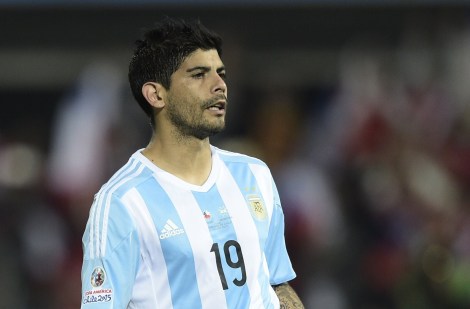
It may have taken the best part of ten years but Argentina midfielder Ever Banega appears to be finally fulfilling the enormous potential he showed as a teenager breaking into the Boca Juniors side. Inconsistency and downright stupidity have cost Banega throughout his earlier career but after gaining the trust of Gerardo Martino, the 27-year-old impressed against Brazil last week and again in the humidity of Barraquilla in the victory over Colombia. He is now at a potentially defining moment in his career; with six months remaining on his current contract at Sevilla, Banega could be one of the most sought after free agents in Europe and as a result the likes of Everton, Manchester United, Juventus and Roma are circling. Finally in the spotlight after a series of false starts, Banega’s next career move must be the correct one or he risks wasting his talent.
Argentina’s recent injury crisis was compounded when enganche and Gerardo Martino’s seemingly preferred option Javier Pastore joined the list of those on the treatment table. With a hugely significant clasico against Brazil looming, options appeared scarce so when it was revealed that La Albiceleste would field a midfield three of Javier Mascherano, Lucas Biglia and Ever Banega, there were some doubts over whether this formation would provide enough forward thrust and creativity.
The burden in that regard would fall to Banega given that Mascherano’s role is to do the dirty work in front of the defence and Biglia’s, despite being a little more offensive, is to support and keep possession. All three men could be or, at least have been, described as ‘number fives’ – one of the positions most revered in Argentine football. Loosely it is the position of a defensive midfielder shielding the back four and initiating the attacks. However, the manner in which this is done can vary hugely, ranging from the aggressive destroyer who gains adulation for his huevos and leadership, like Mascherano, to the elegant artistry of a deep lying playmaker, like Fernando Redondo. In spite of this variability, playing with three fives would appear overly cautious and likely to cause the disconnect with the attack that has plagued Gerardo Martino’s tenure so far.
In pushing Banega to the point of the midfield triangle, behind lone striker Gonzalo Higuain and between pacy widemen Angel Di Maria and Ezequiel Lavezzi, Martino reaped the rewards of playing to the Sevilla player’s strengths. While combative enough to hold his own in central midfield, without a stifling burden of defensive duties he was able to display his wonderful array of passing and creativity in the opposition half. Any pre-Brazil match fears now seem obsolete and Banega may well have staked his claim for a future place in Martino’s midfield even after Lionel Messi and Sergio Aguero return from injury.
This identity crisis of positions for Banega stretches back to his teenage years both with Boca and the national team. Banega captured the eye starring in the last Argentina under-20 World Cup winning side in 2007 alongside Sergio Aguero and Angel Di Maria. As La Albiceleste swept to a fifth world title in twelve years, Banega shone in the number five role but it was his outstanding passing ability and awareness that stood out above any defensive work. Earlier in the year, the 18-year-old had already broken into the Boca Juniors first team following the sale of Fernando Gago to Real Madrid and the Rosario-born youngster proved an instant hit. Replacing the talented but undoubtedly less expansive Gago, and with the iconic Juan Roman Riquelme operating further upfield, Banega was forced deeper but his range of passing was evident. Boca captured the Copa Libertadores just weeks prior to the under-20 World Cup and Banega was the one to watch.

 golazo argentino