

The World Cup in Russia in 2018 is seen by most as Argentina’s last opportunity for major honours with their so-called golden generation but having leaned so heavily on the same group of players for so long and falling just short on three occasions, Edgardo Bauza now faces the task of integrating and reshaping the national team.
La Albiceleste continue the marathon of South American World Cup qualifying against Peru on Thursday night and with injuries to Lionel Messi and Lucas Biglia it is likely that Paulo Dybala and Matías Kranevitter will be presented with another opportunity to audition for a more permanent future role.
Dybala’s sensational form over the past couple of years in Italy have had him on the fringes of the squad for a while and despite his red card against Uruguay last month it appears the 22-year-old will be tasked with filling Lionel Messi’s sizeable shoes in Lima. Matías Kranevitter meanwhile has found the transition to European football a little more testing with Atlético Madrid but has remained a regular in the Argentina squad and is still considered a long-term successor to Javier Mascherano.
Both players could arguably have made the step-up to the senior side far sooner and there are countless further examples of young players waiting in the wings. Injuries have forced the hand of Edgardo Bauza somewhat this week but is El Patón guilty of following in the footsteps of Gerardo Martino and failing to begin the process of evolution soon enough?
The changing of the guard
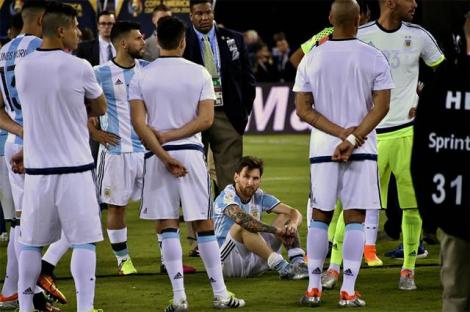
Firstly, it is perhaps unfair to already be calling for major changes from Edgardo Bauza given that the Copa Libertadores winning coach has had almost no time in the hot seat and Thursday’s match with Peru will be only his third in charge. And secondly, it must also be added that nearly all of the generation that have played a part in the three consecutive final defeats remain outstanding footballers at club level.
However, how much does three final defeats and some of the criticism received affect the mentality of these players? Gonzalo Higuaín, unquestionably the target of most supporters’ frustration, will likely plunder goals once more in Serie A this season but is he to be trusted in another major final?
The conundrum facing any Argentina coach is just how to go about implementing this transition to integrate a pool of younger players that will carry the side forward beyond Russia while ensuring that results in the present remain equally strong.
Alejandro Sabella took the oldest average squad to Brazil in 2014 and while Hugo Campagnaro at 33 was far from the oldest player at the tournament there was a noticeable absence of players from the generation post-Pékerman’s youth team revolution. Marcos Rojo, the youngest at 24, was hardly an inexperienced novice bursting onto the international scene and it represented a pattern set in motion when Lionel Messi and the other under-20 graduates began filtering through.
Pékerman’s vision
José Pékerman understood the importance of the youth system and under his guidance Argentina enjoyed a period of supreme dominance at under-20 level in the late 1990s and early 2000s. Three World Youth Cups had preceeded the two lifted under the stewardship of Pékerman’s successors in 2005 and 2007 but it is from this group that Argentina still draws from so heavily.

 golazo argentino