“Ericowasdifferentfrom everyone, from everything thatI saw.A remarkable player.Allthatencompasses,withoutexaggeration,the fivelettersinthewordcrack.Forme,acircusjuggler,anartist.Sorry,agreat artist” – Alfredo Di Stéfano
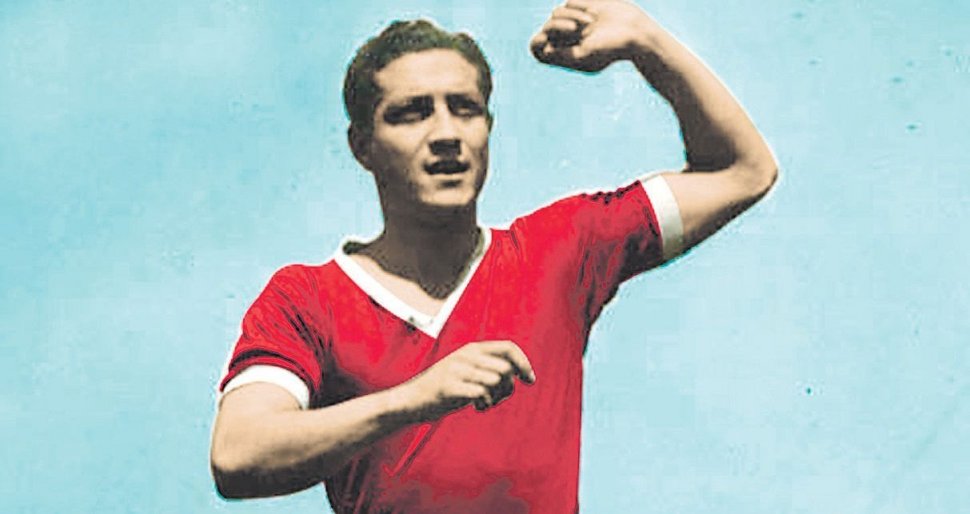
If a player of Di Stéfano’s class cites another professional as an influence and nearly seventy years after retiring from football that same player remains the leagues leading scorer and an icon at one of the biggest clubs in Argentina then it is safe to assume we are dealing with a very special footballer. One hundred years ago today; March 30th 1915 in Asunción, Arsenio Pastor Erico Martínez was born: Paraguay’s greatest player and the Argentine Primera’s leading goal scorer.
Erico made his debut for Paraguayan side, Club Nacional at the age of fifteen and it was his already noticeable footballing talents that in many ways saved him as Paraguay was in the midst of war with Bolivia over control of the oil-rich region of Gran Chaco. At seventeen years of age, Erico was sent to the front line like so many young Paraguayans but was recognised by a Commander Molinas who was said to be a Nacional supporter and instead sent Erico to play for the Red Cross football team. The Red Cross toured Uruguay and Argentina with the purpose of raising funds for the wounded Paraguayan soldiers and young Erico was one of the stars.
During this tour of 1933 in which they faced all of the major sides in Uruguay and Argentina, Erico caught the eye of several clubs. River Plate were the first to try and sign the 17-year-old but the move failed to materialise leaving Independiente to swoop. Officials from the Avellaneda giants actually proposed the move in the changing rooms of Boca Juniors and although this was initially blocked by the Paraguayan military, the then astronomical fee of 12,000 pesos was enough to persuade them to allow the transfer.
In addition to Erico’s 5000 pesos signing bonus, which he donated to the Red Cross, it was a huge amount of money towards the relief effort.
Erico was an immediate success in Avellaneda and as his goal tally continued to mount up over the coming seasons, he became famous for his outstanding heading ability. Francisco Varallo, Boca Juniors’ centre-forward of the same era said: “Erico’s best weapon was when jumping. He beat goalkeepers and scored all his goals with his head. He was impossible to mark. But not only that: he was also a gentleman” This remarkable leap earned him the nickname ‘The Red Jumper’ and after plundering 48 goals in the 1937 season and another 43 in 1938, Argentina came calling.
With the World Cup in France in 1938, Argentina attempted to persuade Erico to switch allegiances and represent La Albiceleste but despite rising to prominance and living in Argentina, he remained a proud Paraguayan. This stance and his warm personality made him an even more popular figure both in his homeland and in Argentina.
A deadly finisher Erico went on to score 295 goals for Independiente, leading them to three Primera División titles in 1938, 1939 and 1942 before he left the club in 1946. There was a very brief spell with Huracán before he announced his retirement in 1947 but he is entwined in the great history of Independiente.
His record of 295 Primera goals to this day makes him the leagues leading scorer and to mark this 100th birthday, Independiente president Hugo Moyano was today unveiling a plaque to commemorate Erico at the Estadio Libertadores de América.
Perhaps what illustrates Erico’s importance to both Argentina and Paraguay more than any of his achievements is what happened after he died in 1977. Having lived most of his life in Buenos Aires, he was buried outside the city limits in the town of Morón but in 2010 the Argentine and Paraguayan goverments agreed to have his body moved back to Asunción where it can be found today beneath the Estadio Defensores del Chaco.
Few players could boast such importance across borders and it is testament to the impact that Arsenio Erico had on football.

 golazo argentino