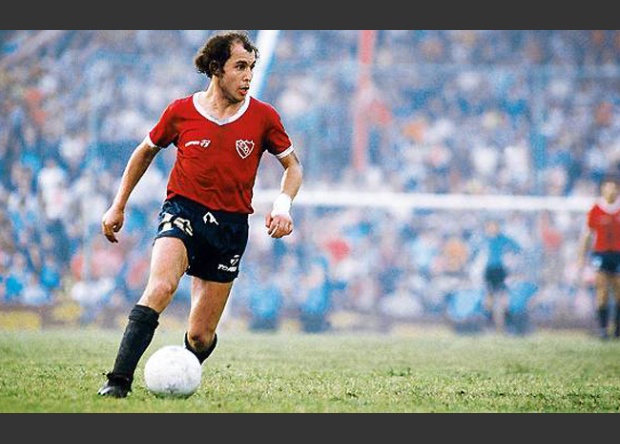
The late 1960s and 70s were an era of dominance for Argentine football and during the period the country provided four distinct winners of the competition. Some of the world’s leading players made Argentine club sides feared across the continent but one team etched their name more than any other into the history of South America’s biggest prize. Between 1972 and 1975 Independiente lifted the famous Libertadores trophy on four consective occasions, a feat only achieved on this one occasion, and perhaps unlikely to happen again.
Independiente had already won back-to-back Copa Libertadores titles in 1964 and 1965 so the club were no strangers to international success but by the end of the decade had found themselves usurped by Estudiantes as the dominant force in the Libertadores. Osvaldo Zubeldía’s side completed a hat-trick of triumphs in 1970 but no one could have imagined that the golden era in Independiente’s history was just dawning,
Two Metropolitana league titles in 1970 and ’71 precluded the Libertadores run but provided the momentum for what was to follow. Two of the biggest club legends had remained with Independiente from the Libertadores triumphs of ’64 and ’65 and in goalkeeper Miguel Ángel Santoro and fearsome left-back Ricardo Pavoni, manager Pedro Dellacha had a welcome amount of experience to compliment the talents of José Pastoriza and Miguel Ángel Raimondo in midfield and striker Agustín Balbuena.
After two group separate group stages, Independiente qualified for the final against Universitario of Peru and after a goalless draw in Lima, a brace from Eduardo Miglioni inside La Doble Visera in Avellaneda gave El Rojo a 2-1 win and ensured a third Libertadores in the twelve year history of the competition.
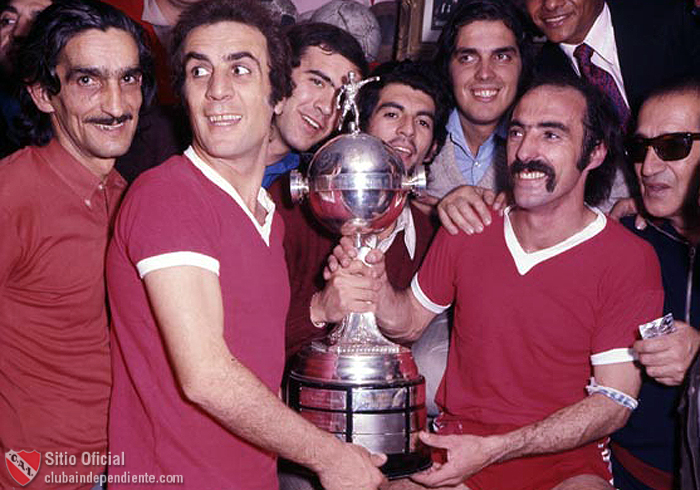
One year on and Independiente, as holders, entered at the semi-final group stage and after coming out above Millonarios and San Lorenzo they were in another continental final. In ’73 El Rojo no longer had Dellacha in charge and instead the inexperienced Humberto Maschio was at the helm. Maschio was better known as a one of the ‘Angels with dirty faces’ who left Argentina for Italy as players in the late 1950s and despite his long association with Racing Club returned as coach of rivals, Independiente.
The final saw Independiente face Chilean side Colo-Colo and although much of the starting eleven was similar to that which had lifted the trophy a year earlier, Maschio had the two young talents of Ricardo Bochini and Daniel Bertoni coming through. A 1-1 draw in Avellaneda was followed by a goalless draw in Chile but with no away goals rule, a third match was scheduled in Montevideo. This proved equally close and with the scored locked at 1-1 after 90 minutes it went into extra-time and Miguel Giachello bundled in a controversial winner to claim back-to-back Libertadores titles for the second time.
One year later and Independiente had a third different manager after Roberto Ferreiro took up his first coaching role since retiring as a player with River Plate three years earlier. Ferreiro may have ended his career at the Monumental but was better known for his lengthy playing career in Avellaneda where he was part of the side that won the Libertadores back-t0-back in the sixties.
Just as it was in 1973, Independiente joined in the semi final group phase and topped group one after overcoming Peñarol and the great Huracán side of ’73. Brazilian side São Paulo awaited in the final and once again it went to the wire. Two goals in two second half minutes had overturned Hugo Saggioratto’s opener for El Rojo and given the Brazilian side a slender lead ahead of the second leg just four days later in Avellaneda. In need of a win, Ricardo Bochini fired in a free-kick and when Agustín Balbuena added a second it forced the game to a third playoff match to be held in Santiago three days later.
There was still little between the two sides and the match was ultimately decided by two penalty kicks. Peruvian referee Augusto Orosco awarded a spot-kick to Independiente during the first half and Ricardo Pavoni tucked it away but when Ze Roberto had the same chance in the second half we saw his effort stopped by young goalkeeper Carlos Gay. The match ended 1-0 and Independiente had levelled Estudiantes’ three consecutive Libertadores record.
Gunning for a historic fourth title, Independiente welcomed back Pedro Dellacha as manager in 1975 but came close to falling at the first hurdle. Losing both their opening fixtures in the semi final against Rosario Central and Cruzeiro, El Rojo needed a minor miracle to progress to the final. However, Ricardo Bochini produced one of his finest performances to orchestrate the required 3-0 victory and snatch top spot in the group on goal difference. With qualification secured Independiente were pitted against Chilean side Unión Española in the final.
Dellacha had a superb blend of defensive grit and experience in the likes of EduardoCommisso, FranciscoSá and RicardoPavoni but the skill and youth of Ricardo Bochini and Daniel Bertoni in attack but an excellent Unión Española side ensured that a third match was still needed. A 1-0 home win in Chile was replicated in Avellaneda meaning the two sides travelled to Paraguay for the decisive playoff.
In the Estadio Defensores del Chaco de Asunción on June 29th Independiente made history. The very same stadium where Independiente and Paraguay legend, Arsenio Erico played as a teenager was the location for a new crop of icons to lift the Libertadores trophy for a fourth time. Goals from Ricardo RuizMorenoandDanielBertoni capped a wonderful team performance and ensured a place in the history books.
Such is the nature of the tournament now and the fact that talented young players rarely stay in South America mean that it is hard to imagine this ever being repeated. Independiente’s more recent past and present are much less impressive but the supporters will always have this side to remember.